


Chapter 7 of my recently released book, Undeniable Startups! The Founder’s Guide for Fundraising & Building Resilient Businesses focuses on “Founder Character,” the leadership qualities that shape how a founder makes decisions, handles crises, attracts people, and stays true to the mission when the road gets rough. Many of these traits, such as integrity, sound judgment, and humility, are hallmarks of leadership in any arena. But when a business is operating in founder mode, the stakes, constraints, and relentless uncertainty raise the bar. Some qualities become non-negotiable because they fuel the founder’s ability to pursue the mission when there are no guardrails. The chapter explores six practical character clusters, but for purposes of today’s article, we’re limiting our focus on one such cluster: adaptability. It’s part of what drives on the pathway to success.
Adaptability. Professional investor obsession with founder track records stems from a simple truth: startup journeys are rarely linear. Those founders who’ve navigated unchartered waters before “expect the unexpected,” and they bring an adaptable, flexible mindset needed to handle those icebergs blocking their path. [FN1]
Startups invariably face difficult challenges. Are you prepared to revise your hypotheses when new information disproves your original assumptions? Are you humble enough to do so? Can you navigate the chaos and confusion that come with abandoning the comfortable path? Can you walk off the clearly marked path planned out by your original hypothesis and pivot in a new direction when the easy road disappears? Adaptability in these moments isn’t weakness. It’s wisdom in action.
A founder’s ability to adapt strategies and iterate around those unpredicted obstacles unlocks a pathway to success. Netflix co-founder Marc Randolph put it succinctly, “Iteration, not ideation, is the most important part of early‑stage entrepreneurship. You have to have a lot of ideas, a lot of bad ideas, if you want to end up with a good one.” [FN2] This adaptability is what enables strong teams to correct course and overcome inevitable execution errors. Such teams test, learn and adjust their strategies. Founders who embrace iteration can pivot when reality changes, turning early missteps, flawed hypotheses, and misaligned markets into stepping-stones rather than stumbling blocks.
Adaptability requires founders to exercise humble discipline in listening, learning, and adjusting course based upon real data. Jeff Bezos once sent an email to 1,000 early Amazon customers simply asking what else they wanted the company to sell. [FN3] His humility in testing assumptions, rather than imposing his top-down plan, is embedded in Amazon’s DNA and serves as a model for adaptability.
💡 Adaptability is another hallmark of great founders.

Setting your course is easy enough at the beginning of your journey. But as Mike Tyson famously put it, “Everyone has a plan until they get punched in the mouth.” [FN4] The real test comes when things go wrong. Startup thought leader, Eric Ries, argues that adaptability, especially the willingness to pivot, is a defining trait of successful ventures. [FN5]
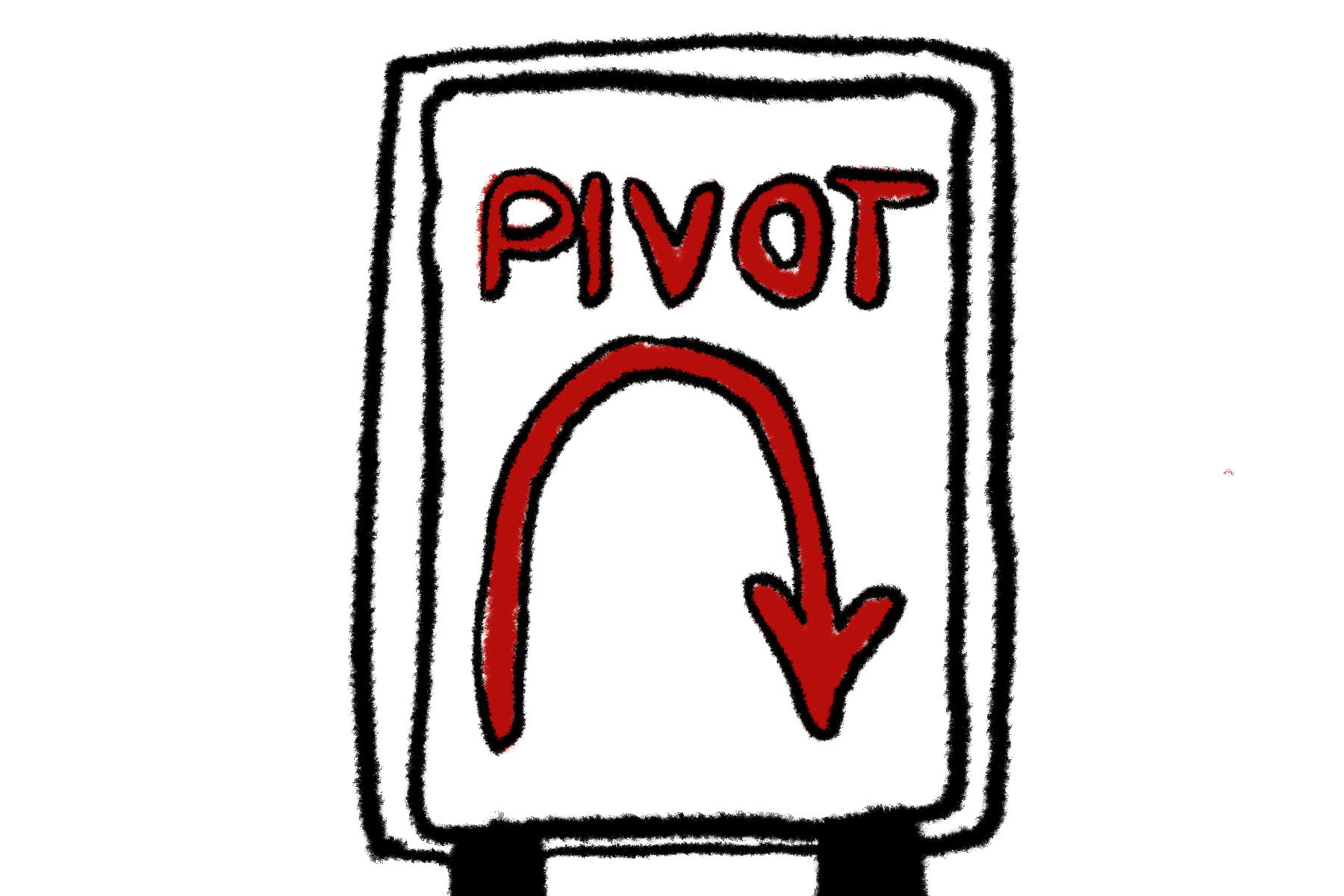
It demands humility, openness to ideas that challenge Plan A, and the discipline to test and refine Plan B. Or as Bruce Lee taught, “Empty your mind. Be formless, shapeless, like water. … Be water, my friend.” [FN6] Adaptability is not rigidity in disguise, but the ability to flow around obstacles and take new shape without losing momentum.

Startup history is full of examples of adaptability in action. Enzo Ferrari, rebuffed by Alfa Romeo, refused to quit and instead built one of the world’s most enduring automotive brands. [FN7] Netflix’s transformation from a DVD-delivery service to a streaming giant rewrote the rules of the entertainment industry. [FN8] Steve Jobs’ adoption of a “Think Different” mindset re-imagined Apple’s future, not merely salvaging the brand but returning its relevance and establishing the foundation for iconic products like iTunes and the iPhone. [FN9]
💡 Adaptability is often the decisive factor that sets apart thriving startups from those that fade into obscurity.
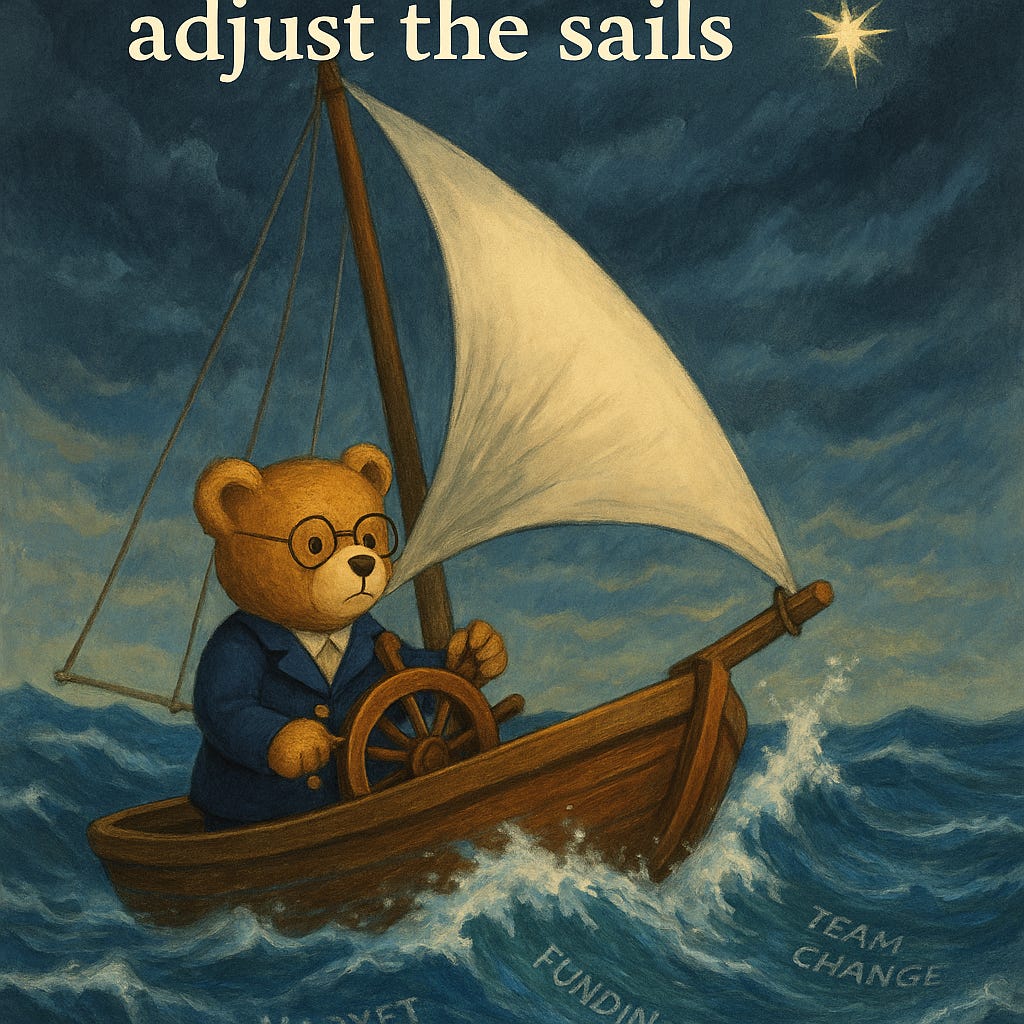
Great founders accept setbacks, correct their course and agilely move in new directions. Such action requires founder resilience. Investors seek personal insight into the founder’s historical path, because it signals how leadership will handle the inevitable challenges to their original business hypotheses. Will they be able to remold the startup operation to adapt to changing information and circumstances? When the winds shift, great startup leaders adjust the sails to stay on course. As Jeff Bezos explained, “We are stubborn on vision. We are flexible on details.” [FN10] Adaptability is not about abandoning your North Star; it’s about adjusting the path while keeping the destination clear.
Evidence of effective course correction provides confidence to investors that they’re backing the right horse. When founders exhibit adaptability, it supports the belief system of their investors, resulting in greater support for follow-on investments, recruitment of top talent and exposure to the VC’s ecosystems of portfolio companies and strategic partners.
💡 Founder adaptability is one of the entrepreneurial superpowers, an admirable ingredient evident in great founder teams.
Adaptability: Scaling the Self. The need for adaptability doesn’t stop at the product roadmap or go-to-market (GTM) strategy. Sometimes, the critical pivot is internal to the founder. Danny Rimer of Index Ventures recalled a defining early moment in Figma’s journey involving its founder:
“We sat down with him and explained to him the situation… We said, ‘Look, this is an impasse. You’re going to have to adapt and change.’ And he heard it and he changed. I think that’s such a great character trait of Dylan [Field]—to hear the information, be objective about it, process it and accept it and act accordingly, if it makes sense.” [FN11]
That level of personal transformation requires more than intelligence, it demands humility, self-awareness, and the willingness to grow. Dylan Field took the investor’s feedback seriously and adapted, resulting in forging a new leadership culture that would carry Figma through years of uncertainty, including the dramatic collapse of a $20 billion acquisition offer by Adobe. By the time the Adobe exit deal unraveled, Field and his team were battle-tested. They knew what it meant to keep building. That resilience, rooted in early lessons about adaptability, ultimately powered one of the most successful IPOs of 2025.
Control of one’s own mindset is essential for establishing an adaptable framework. In a 2005 Stanford address, Steve Jobs urged graduates to “stay hungry, stay foolish.” [FN12] Jobs was issuing more than a call to be curious. By staying hungry for the next opportunity and foolish enough to challenge convention, founders avoid rigidity, a mental trap which hinders them in pushing boundaries and discovering what’s possible.
💡 Adaptability requires humility, flexibility, and the courage to reexamine your original hypothesis, including those “known truths” about yourself you’ve long accepted as fixed.
Closing Thoughts. Adaptability isn’t a weakness. A founder who is humble enough to embrace new information, reevaluate their original hypotheses and pivot is more likely to plot a successful course. Adaptability is, of course, only one of several hallmarks for startup success. Learn more ---purchase your copy of Undeniable Startups! The Founder’s Guide for Fundraising & Building Resilient Businesses today: https://www.amazon.com/dp/B0FN7KCK7T. Or, if you subscribe and pay for one year+ subscription to The Savvy Startup Advisor newsletter, you’ll receive a signed copy of this book thereafter!
Thanks for reading or listening to this week’s edition of The Savvy Startup Advisor. And thanks for joining us on this journey. Until next time, stay savvy…keep on building!
© 2025. The Savvy Startup Advisor, LLC. All rights reserved.
About the Author: Kevin R. Davis is a 2x General Counsel who offers stakeholders strategic business and legal guidance aimed at optimizing their operations, including implementing lean systems, improving risk management processes, undertaking business transformations, fundraising, engaging in strategic planning and handling exits.
Illustrations by Juliette Davis. Help tip the scale in favor of our talented illustrator, a graphics design student, Juliette Davis: https://buymeacoffee.com/savvystartupadvisor.
Nothing contained in this article should be construed as legal or investment advice. This article does not create an attorney-client relationship between any reader and its author. Neither the author nor the publisher is responsible for updating this publication to consider any changes in applicable laws. Nothing in this article is based upon the author or publisher’s experience with any specific individual or organization; any resemblance to actual persons, places, or events is purely coincidental. If legal advice or other professional assistance is required, the services of a competent professional should be sought.
References
FN 1/ Heraclitus. (2001). Fragments (B. Haxton, Trans.). Penguin Classics.
FN 2/ Randolph, M. (n.d.). “Iteration, not ideation, is the most important part of early‑stage entrepreneurship. You have to have a lot of ideas—a lot of bad ideas—if you want to end up with a good one” [Quote]. BrainyQuote. https://www.brainyquote.com/quotes/marc_randolph_1053106
FN 3/ Premack, R. (2018, September 17). Jeff Bezos emailed 1,000 Amazon customers in 1997 asking what he should sell — and the common theme in their answers is still clear in the business model today. Business Insider.
FN 4/ Tyson, M. (1987, October 15). Mike Tyson says Biggs will fall in early rounds. The New York Times. https://www.nytimes.com/1987/10/15/sports/tyson-says-biggs-will-fall-in-early-rounds.html
FN 5/ Ries, E. (2011). The lean startup: How today’s entrepreneurs use continuous innovation to create radically successful businesses. Crown Business.
FN 6/ Lee, B. (2000). The warrior within: The philosophies of Bruce Lee (J. Little, Ed., p. 12). McGraw-Hill.
FN 7/ Yates, B. (2000). Enzo Ferrari: The man, the cars, the races. New York, NY: Doubleday.
FN 8 / Keating, G. (2012). Netflixed: The epic battle for America’s eyeballs. New York, NY: Portfolio/Penguin.
FN 9 / Isaacson, W. (2011). Steve Jobs. New York, NY: Simon & Schuster.
FN 10/ Bezos, J. (1997). Amazon.com 1997 Letter to shareholders. https://www.aboutamazon.com/news/company-news/1997-letter-to-shareholders
FN 11/ Feiner, L. (2025, August 3). Figma CEO’s path from college dropout and Thiel fellow to tech billionaire. CNBC. https://www.cnbc.com/2025/08/03/figma-ceo-dylan-fields-path-from-college-dropout-to-billionaire.html
FN 12/ Jobs, S. (2005, June 12). “Stay hungry. Stay foolish.” Stanford University Commencement Address. Stanford University. https://news.stanford.edu/2005/06/14/jobs-061505/


